

Arizona’s heat makes it hard to keep plants green and strong. The desert heat dries out the soil quickly, and plants can struggle without a clear plan. That’s why a watering schedule for plants in Arizona is what really matters. The schedule guides you to water in balance, neither overdoing it nor holding back. A little regular care keeps the yard looking alive through the year. This guide will walk you through the steps for every season. Let’s get started.
Here’s your complete guide to native Arizona trees for beautiful landscaping.
Watering Plants in Different Seasons

Watering Plants in Different Seasons
Arizona’s seasons come with big shifts in heat and dryness, and every plant in the garden feels those changes. So, each season brings new needs for plants. A garden stays strong and in its best condition all year round when it gets the right amount of water, given in the right way and at the right time.
1. Summer (May to October)
Summer is the hardest time for any garden in Arizona. The sun is strong, and the soil dries very fast. The Arizona Department of Water Resources shares that the best watering schedule for plants in Arizona is to do it early in the morning or later in the evening when the air is cooler. Give plenty of water and let it soak down deep. That way, the roots find cooler soil and grow tougher.
2. Spring & Fall (March–May, October–December)
Spring and fall act as bridge seasons. Days are warm but not as extreme as summer. Plants need less water, yet they still need care. Make small changes to the schedule during this time of the year so the plants can get used to less watering in the winter. However, do not let the soil get soaked entirely.
3. Winter (December to March)
Most plants are not active in the winter. During the cooler season, plants’ growth slows down, and some even go into a deep sleep. Therefore, don’t water much during this time every two or three weeks will be more than enough. Also, before adding water, always check to see if it has either rained or frozen naturally. Nature might have offered enough, removing the need to water manually.
How Often Should I Water My Plants?
It is not only about timing; how often the water should be given is what matters too. In Arizona, every season has its own plant routine and unique watering needs. If you provide water properly, the roots become stronger, and less water gets wasted.
Below are the optimal watering timing details for each season:
Spring (March to May)
In spring, plants wake up from the cooler months. A steady watering plan works best here. Give water every seven to ten days so it reaches the deep soil. Focus on the lower roots, not just the top of the dirt.
Summer (May to October)
Hot summer days demand more care. To stay healthy, most plants need water every two to three days. Mulch on top holds moisture, shields the roots from heat, and supports a better watering schedule for plants in Arizona.
Fall (October to December)
Growing plants slow down when the air gets cooler. A few times a week is a good enough amount of watering during this period. Moreover, in cooler weather, extra water can damage roots and leave them weak, so it’s best to watch the soil closely.
Winter (December to March)
In the winter, you may take watering plants as an easy task. There should only be one time watering every two to three weeks. Sometimes, you don’t even need to water at all, especially after a rain, because the dirt already holds enough water.
New Plants vs. Established Plants
Not all plants need the same care. New plants need a different approach than established ones. Knowing how they vary helps you set up the right watering schedule for plants in Arizona.
New Plants
Young plants have shallow roots that dry out fast. They need water more often so the roots stay damp and grow strong. A drip system or soaker hose works well since it gives slow water right where the plant needs it. This gentle method also saves water in the desert heat.
Established Plants
Mature plants have deeper roots that can reach more soil. They need water less often, but it has to get deep into the soil. By watering longer, roots grow down rather than across the surface, which helps the plant face hot and dry days easily.
Tips to Prevent Overwatering & Underwatering
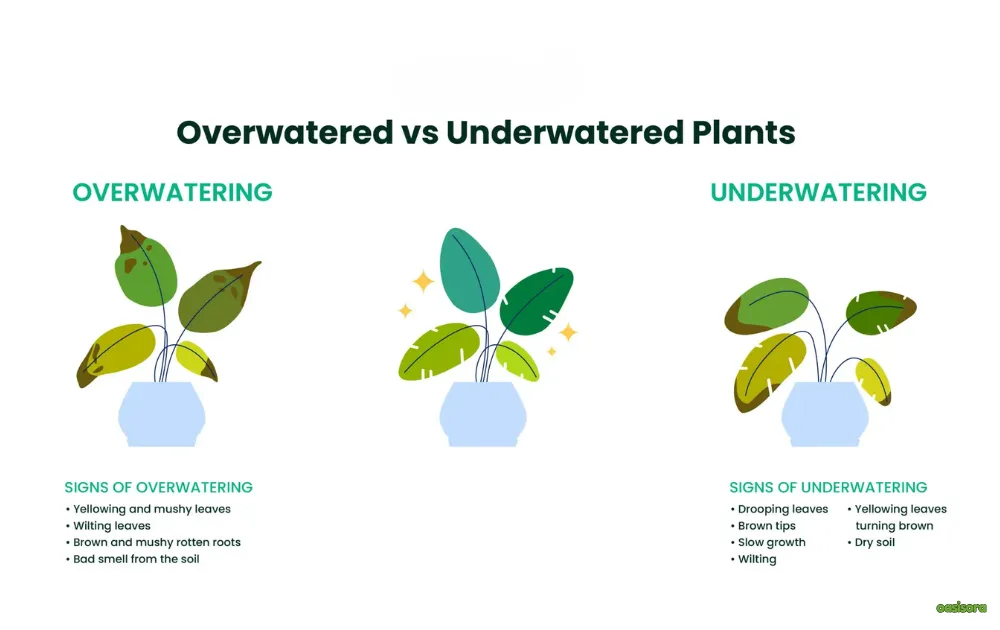
Overwatering & Underwatering Plants Tips
Plants can suffer when they get more or less water than they need. Watching the signs helps you keep the perfect balance and follow the right watering schedule for plants in Arizona.
- Signs of too much water: Leaves may start turning yellow. Roots can rot, and the soil may even smell bad.
- Signs of too little water: Plants begin to droop. Leaves feel dry, and the soil gets hard and dusty.
Simple check: Press your finger a few inches into the soil. If it feels dry, water is needed. For more accuracy, a simple moisture meter can also guide you.
Keeping an eye on these small signs will help your garden stay safe and strong in the long run.
Water-Saving Tricks for Arizona Gardeners
Every drop counts in the desert. In Arizona’s hot weather, even a little change needs proper check and help. The gardeners there cut water waste and keep your watering schedule for plants in Arizona working fine.
- Put some mulch on the soil. It cools the ground, slows water loss, and gives roots coverage from the hot sun.
- Drip lines make watering easier. They send water straight to the roots, bit by bit, so plants stay strong without wasting much.
- Water in the morning or evening when it’s cooler. At those times, more water sinks in and less is lost to heat.
- Keep plants with the same water needs together. This way of watering is simple, and you won’t end up giving too much or too little.
These simple tricks keep your garden fresh while saving water for the future.
Common Problems and Fixes
Watering carefully doesn’t always stop trouble. If you notice any other problems early, you can fix them before they harm your plants.
Salt Buildup
The University of Arizona Cooperative Extension explains that in desert soil, salts can gather over time, which harms roots and burns leaf edges. To solve this, flush the soil with deep watering every few months. The extra water pushes salts down and away from the root zone.
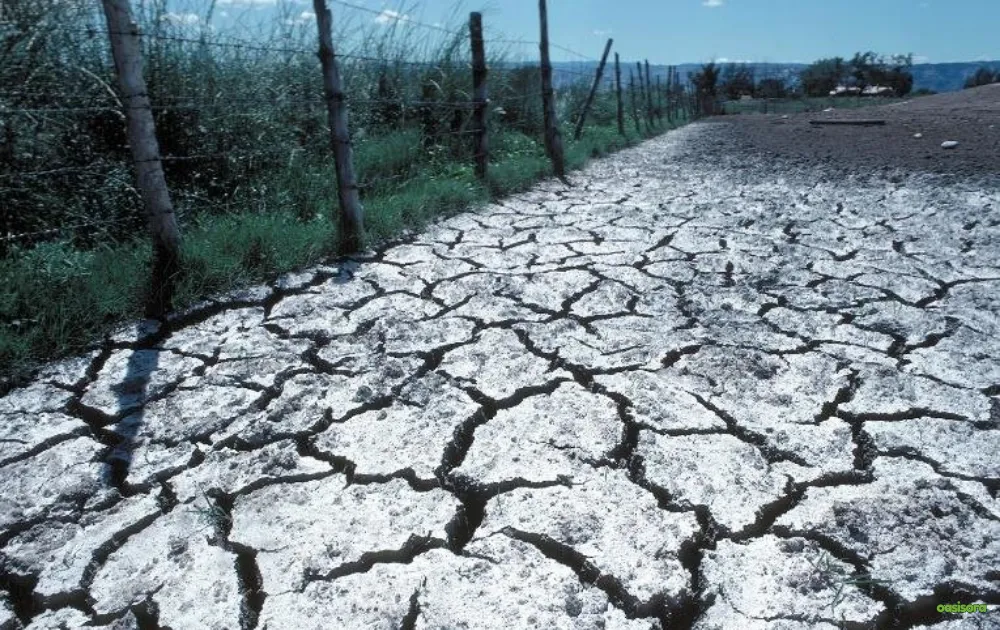
Salt Buildup
Heat Stress
Even with plenty of water, plants can suffer under harsh sun. Adding shade cloth or planting taller companions nearby gives them cover, keeps them cooler, and eases the stress.
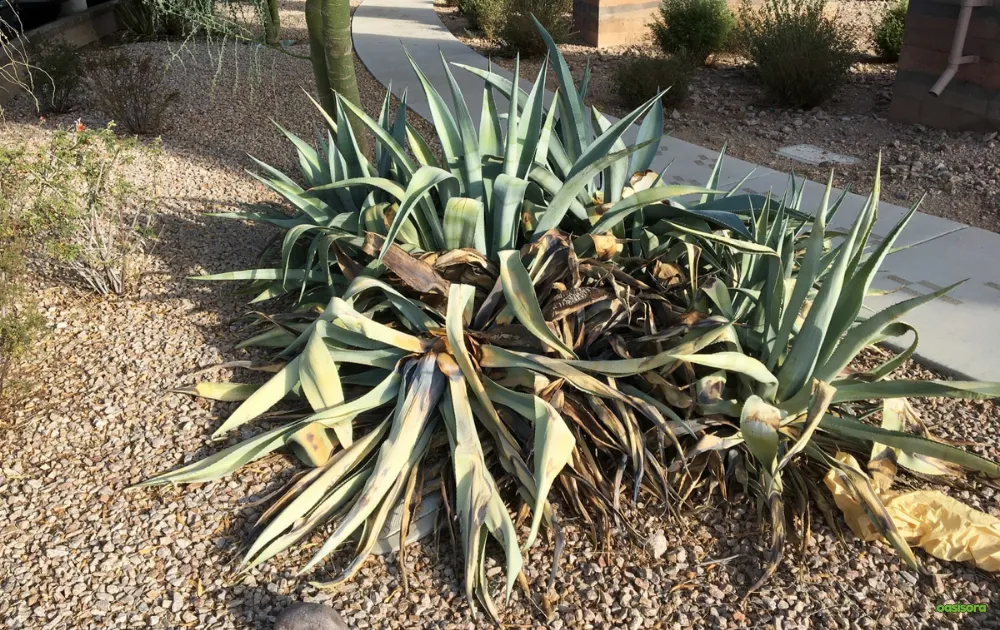
Heat Stress Plants
Final Thoughts
A Healthy Desert Garden
Arizona gardening may look hard, but it is possible to grow strong and bright plants. Balance is what really matters here. The right watering schedule for plants in Arizona not only protects the roots but also saves water. Also, it can keep a yard looking green, even when the desert heat is at its worst. Remember, small bits of steady care often lead to bigger results than you expect. With time and by keeping up a simple routine, your garden can hold its beauty all year round.
FAQs
How often should I water plants in Arizona in summer?
In the hot months, most plants do better with water every 2 to 3 days. It works best if you do it early in the morning or later in the evening when it’s cooler.
Is drip irrigation better for Arizona gardens?
Yes, it works really well here. The system drips water slowly at the base, so less is wasted and the roots get what they need. Plants stay stronger and healthier this way.
Can rain replace watering in winter?
Winter rains often cover what plants need, so you don’t always have to water. Around once every two to three weeks is usually enough.
What is the best way to avoid salt buildup in soil?
A good fix is deep watering now and then. This pushes salts down and away from the roots.
1 thought on “Watering Schedule for Plants in Arizona (No-Waste Guide)”
Comments are closed.