
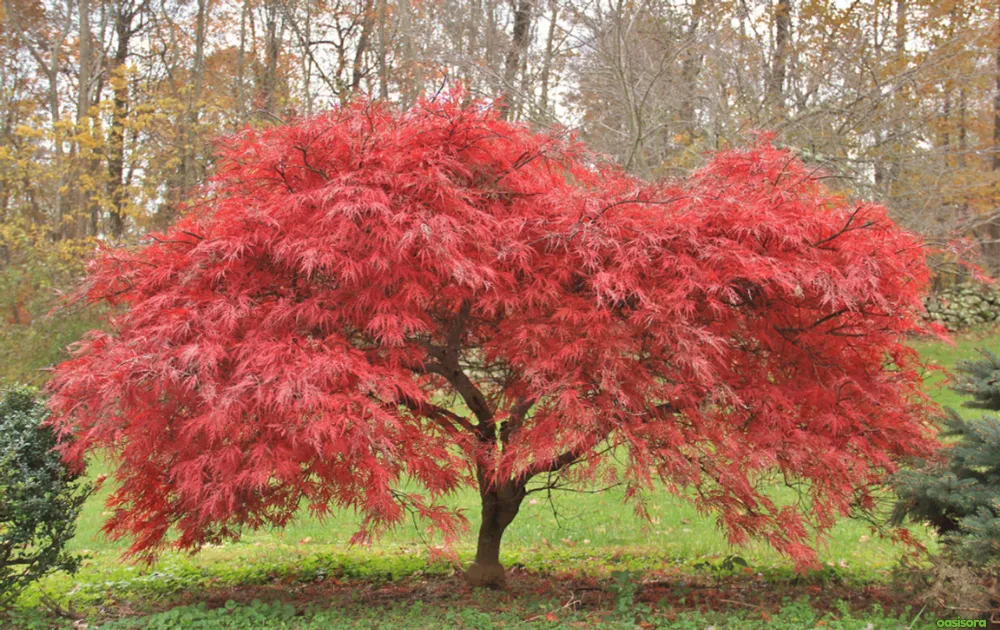
Japanese Maple Trees bring gentle beauty to gardens with their bright colors and elegant shapes. I frequently notice how the fresh leaves in the spring softly shimmer in the Sunlight. The branches spread out by summer, providing a pleasant, gentle shade that is relaxing on hot days. Those branches then turn into eye-catching reds, oranges, and golds by fall.
Because many of these trees stay small, they fit well on patios, in containers, or even in little yards. With steady care, they live for many years and often become the main feature of the garden in every season.
Today, in this guide, I will share the popular types of trees I’ve enjoyed growing, along with simple care tips and design ideas so that you can bring the same beauty into your own space. Let’s get started.
Popular Types of Japanese Maple Trees
Maple trees come in many shapes and colors, each with its own style. Some remain small with gentle, flowing limbs, while others grow tall and provide shade. Gardeners are often advised to use a mix of plant species, as it makes the yard more vibrant and keeps colors changing all year long.
1. Upright Varieties (Palmatum)
These trees grow tall with a straight form. They look great in tiny yards as background accents, focal areas, or in shady spots.
Bloodgood
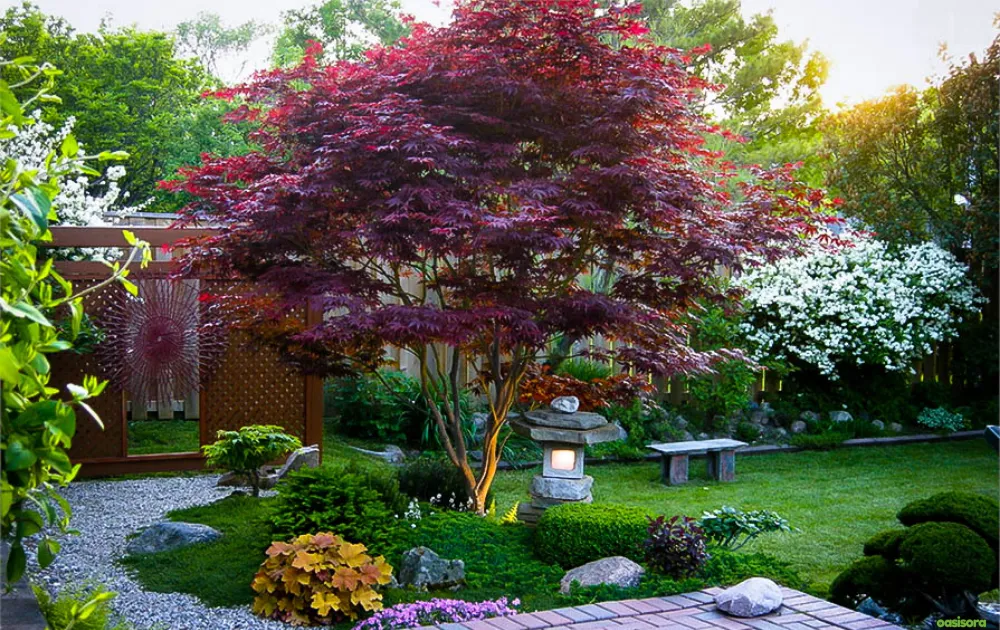
Bloodgood Japanese Maple
Bloodgood is a classic favorite and is often the first variety many gardeners try. After staying vibrant throughout the summer, its leaves turn scarlet in the autumn. It’s a wonderful focal point in a front yard or at a patio corner due to its size. When I planted Bloodgood next to a stone walkway, it produced a consistent crimson display that stood out through the season.
Emperor 1
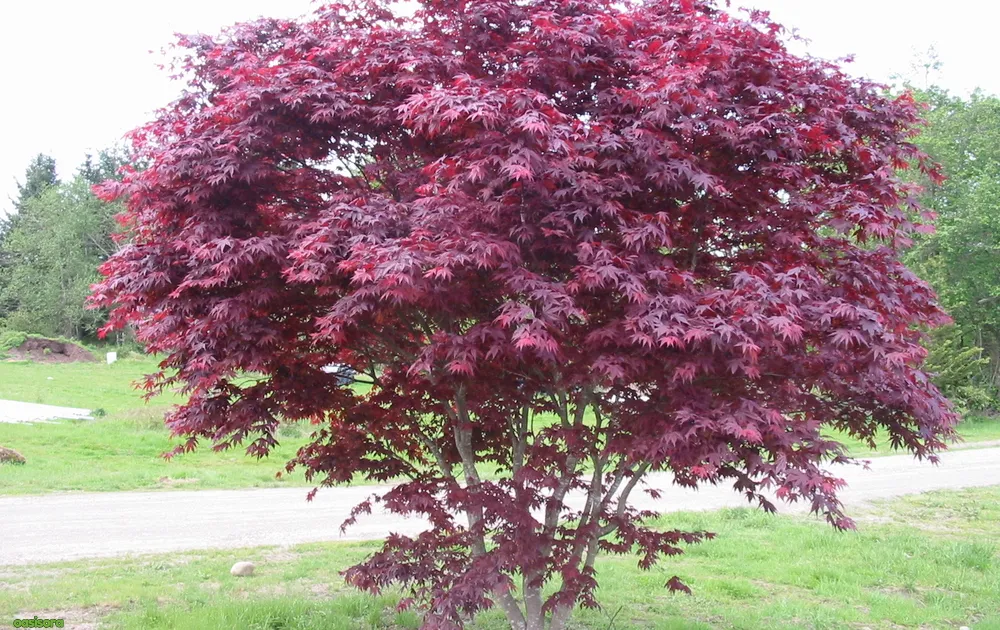
Emperor 1 Japanese Maple
Emperor 1 is strong and handles heat better than most. Approximately 15 feet in height and width, it forms a tidy shape. In summer, it becomes reddish-purple, and by October, it turns to deep red. These Japanese maple trees avoid frost damage by budding later in the spring. If you live in a warm region, you may notice Emperor 1 holding its color better than others. Many people compare it with Bloodgood, but in hot summers, I have personally seen that Emperor 1 keeps its rich red color longer.
Osakazuki
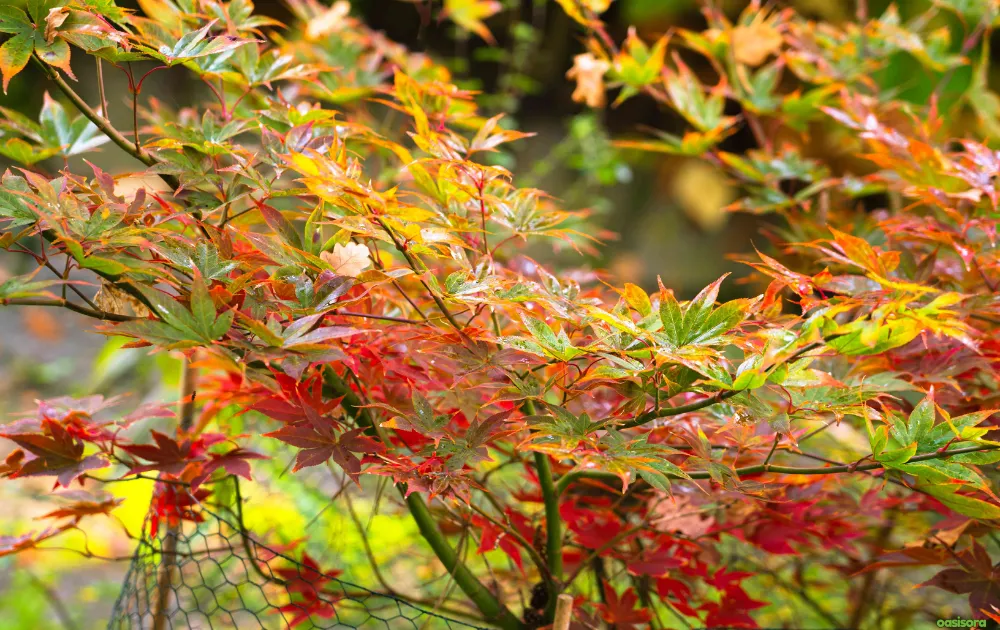
Osakazuki
Osakazuki is most famous for its striking autumn colours. When fall arrives, the leaves’ color shifts from plain green in summer to a vivid scarlet that can be seen from far away. With a maximum height of 25 feet, it is among the larger Japanese maples. In contrast to Bloodgood and Emperor 1, Osakazuki is different because it doesn’t stay red all year. Instead, it saves its energy for a bright, bold show in the fall.
When seen together, these upright varieties show different strengths: Bloodgood offers steady summer red, Emperor 1 manages heat while still glowing in fall, and Osakazuki saves its power for one of the brightest autumn displays.
2. Weeping Varieties (Dissectum)
The curved, tumbling branches of these Japanese maple trees give gardens a gentle, flowing appearance. They give the room a sense of tranquilly and elegance by bringing movement and peace.
Crimson Queen
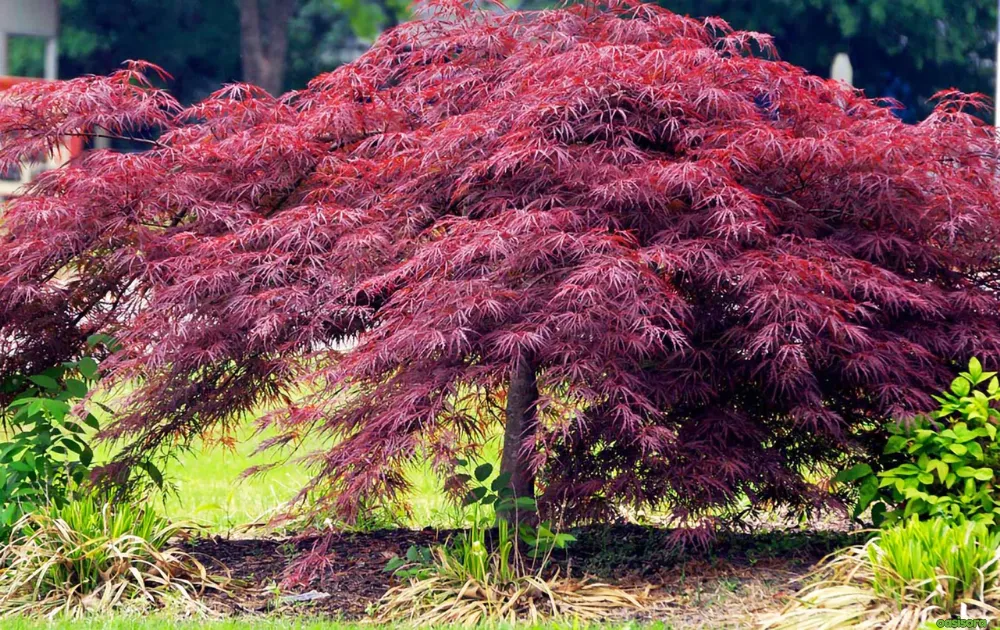
Crimson Queen
The lace-leaf Crimson Queen has delicate, weeping branches. It remains tidy and compact, growing 8 to 10 feet in height and width. Its red leaves hold color through summer and then turn fiery crimson in fall. Many gardeners use it as a specimen tree in small front yards. I placed one near a small pond, and its reflection in the water was just beautiful.
Red Dragon
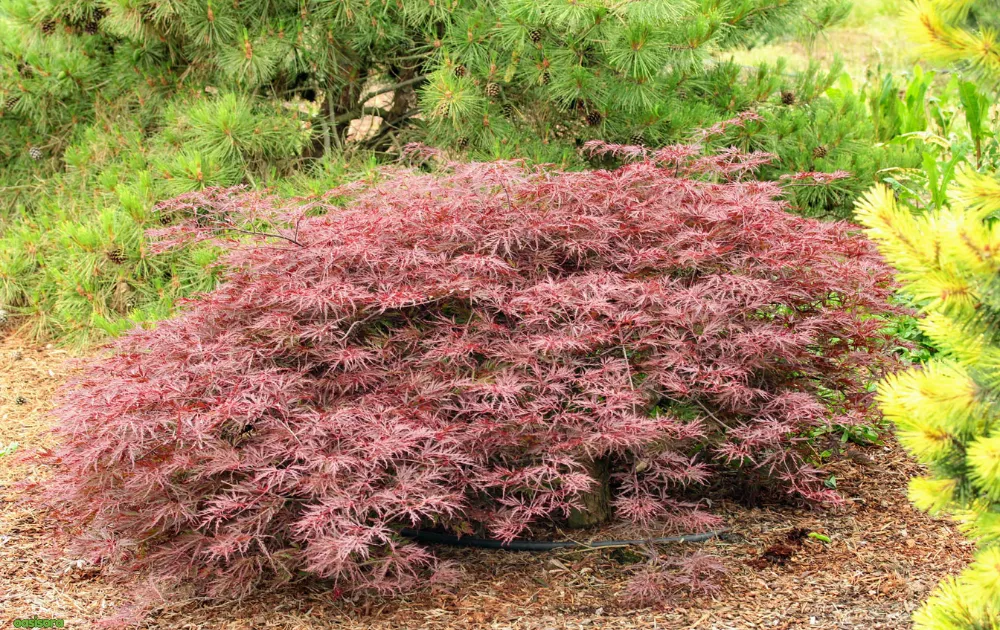
Red Dragon
Red Dragon also has lace-like leaves, but grows more rounded than Crimson Queen. The deep red leaves glow brightly when touched by Sunlight. It grows slowly and reaches about 8 feet tall, which makes it perfect for containers or tight garden spaces. While crimson queen gives a softer red, Red Dragon holds a darker, stronger red appearance all season.
Viridis
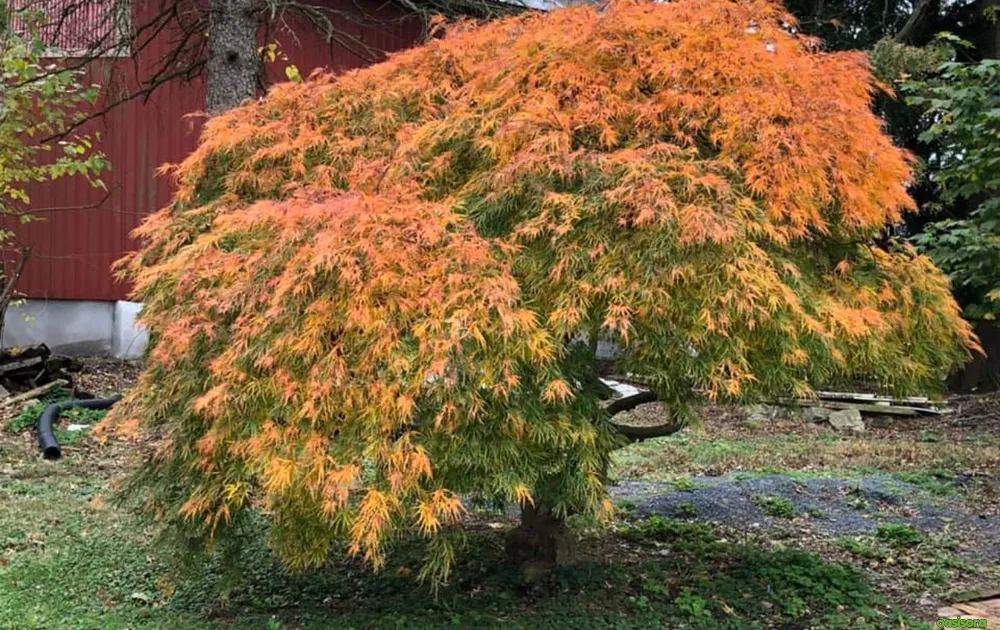
Viridis Japanese Maple
Viridis is known for its verdant foliage. Its colour turns to yellow and orange in the autumn, while it remains a vivid green in the summer. It looks great on slopes or near water features with its gentle, flowing branches. When planted with Crimson Queen and Red Dragon, Viridis brings fresh green that sets off their red tones and makes the garden more colorful. Together, they show how weeping forms can mix fiery reds with calm greens, adding variety and balance to any garden.
3. Unique & Rare Varieties
If you want something that looks special in every season, these Japanese Maple Trees are a great pick. Their bark or leaves have unusual colors that always catch the eye.
Coral Bark (Sango Kaku)
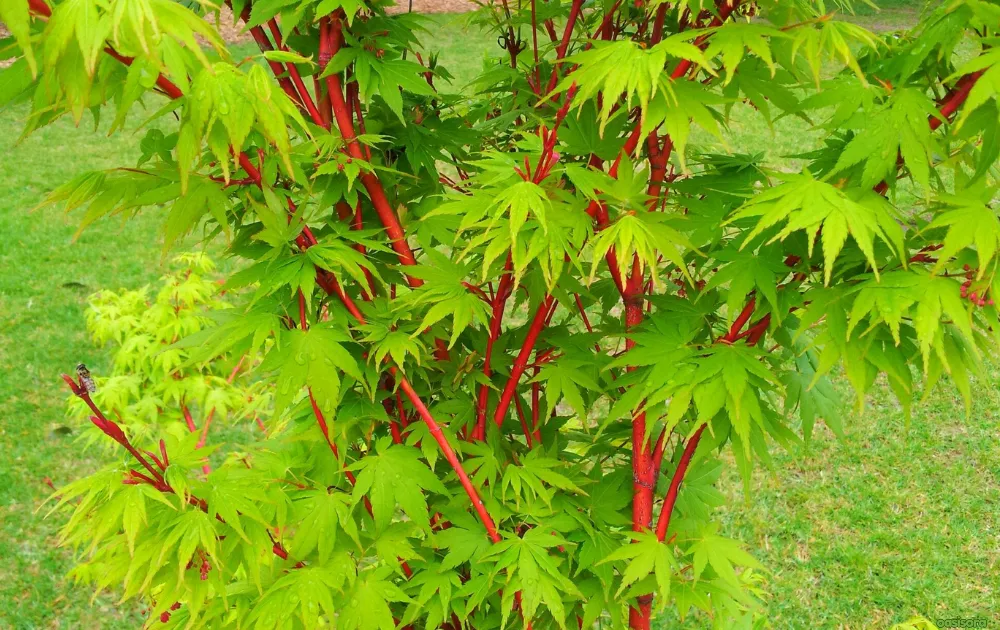
Coral Bark (Sango Kaku)
The Coral Bark maple is admired for its beautiful pink-red bark, which glows in winter when the branches are bare. According to the Royal Horticultural Society, these maples (Acer palmatum ‘Sango-kaku’) are among the best trees for winter appeal due to their colourful stems. In addition to growing 20–25 feet tall, it produces golden-yellow leaves in the autumn. Gardeners love planting it where winter Sunlight can hit the bark, because the color glows brightly against snow or green foliage.
Butterfly
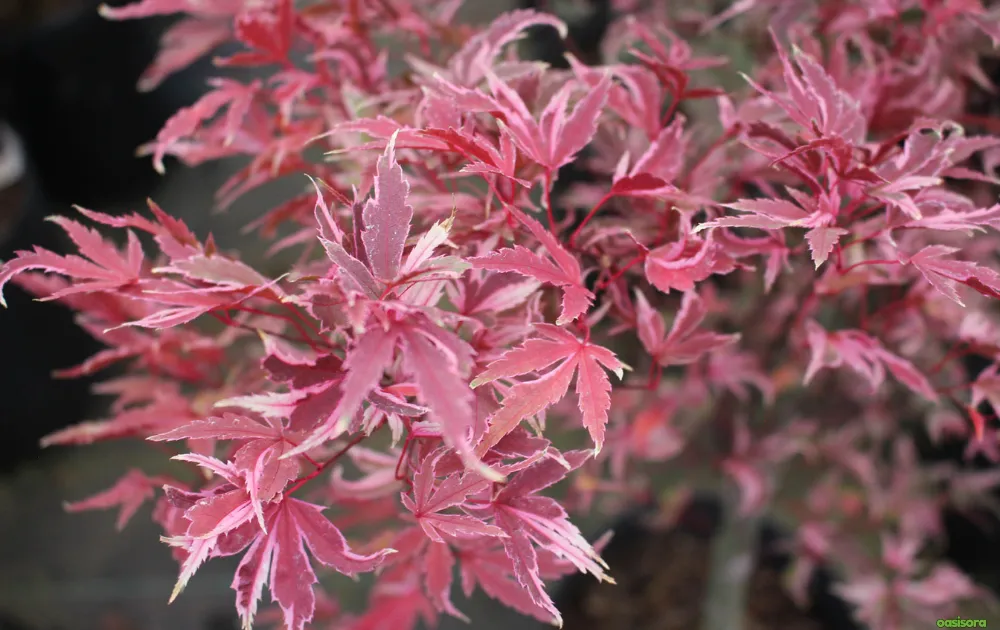
Butterfly Japanese Maple
About ten feet tall, Butterfly is a small tree with green and cream foliage that is frequently tinged pink. It fits well in tiny areas or on narrow beds because of its small size. The variety of hues gives it a unique appearance that contrasts with other maples’ muted reds or greens.
Peaches and Cream
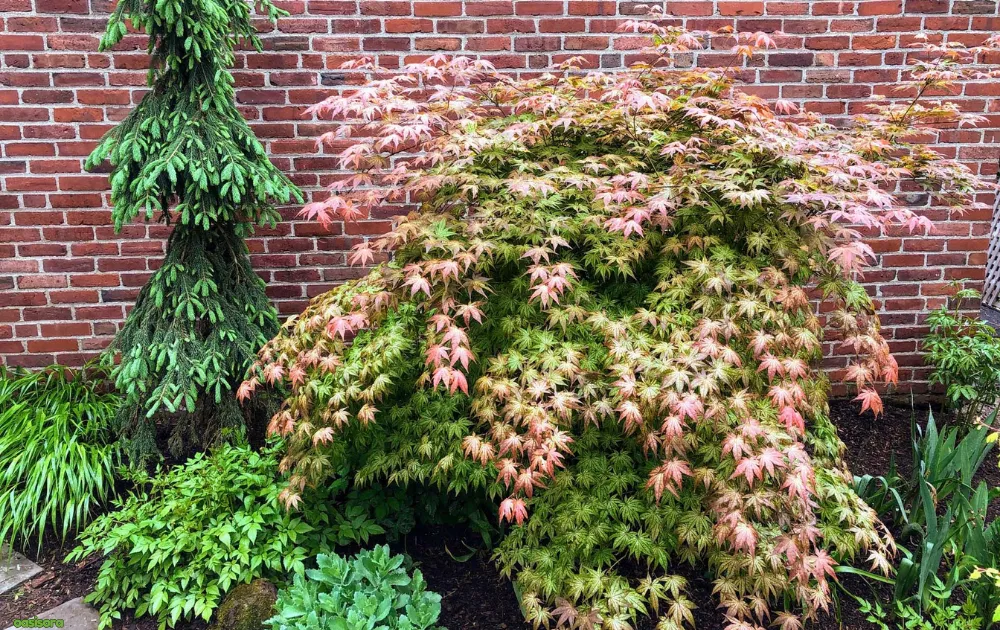
Peaches and Cream Japanese Maple
This rare variety has delicate pastel leaves in shades of cream, pink, and green. In spring, the colors look soft and fresh. In summer, they hold a lighter tone that contrasts nicely with darker plants nearby. Many gardeners use these maples as a specimen tree because their leaves look almost like a painting.
Among these rare varieties, Coral Bark shines in winter with its glowing stems, Butterfly adds interest with its mix of colors, and Peaches and Cream brings soft charm that feels like artwork in the garden.
Why Gardeners Love Japanese Maple Trees?
Indeed, these maple trees add beauty to every season, and they are adored worldwide. Many gardeners choose them because of their gentle shapes, vibrant colours, and ability to flourish in both vast and tiny places. Additionally, since they are always changing and offer something fresh to appreciate all year long, many people refer to them as “living art.”
Year-Round Interest
One reason gardeners enjoy these trees is their beauty in every season. Soft red, green, or pink leaves emerge in the spring. The canopy cools the garden in the summer by casting a gentle shade. The brightest season, autumn, follows, when the trees are glowing in shades of crimson, orange, and yellow. Moreover, the garden feels alive even in the winter because of the texture and shape that their branches and bark provide.
My own maple has always impressed me with the way it changes appearance every few months, just like it tells a new tale with every season.
Compact Growth
In contrast to big shade trees, the majority of Japanese maples remain small and develop slowly. That makes them ideal for balcony pots, patios, and city yards. Since many types only grow 6 to 15 feet, they never occupy the entire area. Also, as they are small, you can appreciate a tree’s beauty without worrying about it growing too big.
Adaptable Nature
Besides gardeners, people also love these trees because they can bend and grow in different ways. If you give them the right care, they can grow well in cool northern places as well as warm southern gardens.
Some types can handle full Sun, but most do better with some shade. Additionally, these plants will still do well whether you put them in the ground or a pot. That’s why they work for both new and expert gardeners who want something sturdy and classy.
Choosing the Right Japanese Maple for Your Garden
There is more to choosing Japanese maple trees than just liking the trees’ color. Every type grows differently and requires different amounts of Sunlight and soil conditions. When you match these with the circumstances in your garden, the tree becomes healthier and more beautiful.
Best for Small Spaces
Tall trees don’t fit in every garden. That makes weeping and dwarf varieties, such as Red Dragon or Crimson Queen, ideal for patios, courtyards, or large pots because they are less than ten feet tall. Their flowing branches and rich leaves bring a strong impact without using much space.
For very tight spots, rare dwarf maples with slow growth and rounded shapes prove great choices. I remember adding a small Crimson Queen to a friend’s patio, and even in that limited space, it became the highlight of the area, proving that size doesn’t limit beauty.
Shade vs. Sun Tolerance
Secondly, Sunlight also plays a big role in how these trees look. Some shade is best for most Japanese Maples, especially in hot places where the afternoon Sun can burn their leaves. The magazine Gardeners’ World says that many types can handle full Sun in cooler areas, but they need shade in warmer places.
In contrast, upright types like Bloodgood and Emperor 1 tolerate more light and often show deeper red tones in cooler weather. Watching how much Sun your garden gets helps keep colors bright and the tree strong all year round.
Soil and Climate Considerations
Indeed, healthy roots are the secret to a long life. Japanese Maples like slightly acidic soil that drains well but still has some water in it. Roots may rot in heavy clay or wet ground. That’s why it helps to fix the soil or improve drainage before planting. Areas 5 through 8 of the USDA work well for most types, and zone 9 is fine for some. In colder places, Bloodgood is one of the more durable options.
In warmer areas, heat-tolerant trees like Emperor 1 do better. Just make sure the right type of maple grows in the right amount of room, Sunlight, and soil. It will be beautiful in your garden for many years.
How to Grow and Care for Japanese Maple Trees?
If you know what they need, it’s easy to grow Japanese Maple Trees. They will give you beauty all year long if you put them in the right place, give them good soil, and carefully take care of them.
1. Planting Tips
Where you place the tree is the first thing you should think about. If you live somewhere warmer, these trees like the Sun in the morning and the shade in the afternoon. Leaves can get burned by too much heat or torn by strong winds. They stay safe and bright in a protected area with scattered light.
Soil is just as important. Well-drained soil with a hint of acidity is ideal for Japanese maple. If the Earth remains soggy or heavy, the roots will be unable to breathe and may begin to rot. The UNH Extension states that soil that drains well, has a high humus level, and has additional organic matter mixed in is ideal for Japanese maple tree growth.
2. Watering & Feeding
Watering should be deep and continuous, not inconsistent. In order to allow water to reach the deeper roots, especially during the hot summer months, wet the soil slowly. Lower the amount during cooler months, but don’t let the soil dry out entirely.
Mulch can be very useful. Spread a layer around the base to keep the soil moist and to protect the roots from heat and cold. Keep mulch a few inches away from the trunk so it does not cause rotting.
Feeding should be light. To support new leaves, use a low-nitrogen fertiliser in the early spring. Also, avoid overfeeding, as this might damage the roots and change the tree’s natural structure.
3. Pruning & Shaping
Pruning works best in late fall or winter when the tree is resting. At this time, remove dead branches, crossing stems, or weak shoots. This keeps the tree open and lets air move through the canopy.
For creative gardeners, Japanese Maples can also be shaped into bonsai or trimmed for special garden designs. Moreover, careful pruning highlights their natural beauty without forcing them into odd shapes. Even small, careful cuts each year make the tree look better as it grows.
4. Pest & Disease Prevention
Japanese Maple Trees are strong, but like all plants, they may face a few issues. Catching them early makes their care much easier.
Aphids
These tiny insects gather under leaves or on soft shoots. They suck sap, which curls leaves and makes them sticky. Sometimes ants follow the sticky coating. Spray with water to knock them off, or use organic insecticidal soap or neem oil if needed. Checking the underside of leaves often helps you catch them early.
Leaf scorch
This shows up as brown, crispy edges on leaves, usually in hot, dry weather. It happens when the roots cannot pull up enough water. Young trees are more at risk. To avoid the problem, water deeply, provide shade in the afternoon, and use mulch so the roots stay cool.
Fungal spots
They often show up as dark spots on leaves, especially in damp places with little airflow. To keep them away, avoid watering from above, thin out crowded branches, and clear any fallen infected leaves. Never compost those leaves, since the spores can spread further.
Other Pests
Scale insects look like bumps on stems, and mites leave yellow spots or a dusty look on leaves. Both can be managed with horticultural oil sprays or natural predators like ladybugs. The good thing is that you don’t need strong chemicals for most of these problems. With simple care like steady watering, pruning for airflow, and using organic sprays, these trees stay healthy and bright for many years.
Landscaping Ideas with Japanese Maple Trees
Undoubtedly, maple trees bring charm to any garden. Their colorful leaves, graceful shapes, and small size make them one of the most flexible trees you can grow. Whether you have a big yard or just a small patio, they fit in well and add a touch of calm beauty. I’ve seen them brighten both large front lawns and tiny balcony pots, which shows how versatile they really are.
1. As Focal Points in a Front Yard
Placing a Japanese maple as the centerpiece of your front yard can change the whole look of your home or garden. A single tree draws the eye, especially in spring when fresh leaves appear, or in autumn when the foliage turns fiery shades of red, orange, and gold. Even in winter, the bare branches stand like art against the sky.
You can plant one by the entry path, next to the driveway, or even in the middle of a lawn to make it stand out. Especially, upright types like Bloodgood or Emperor 1 are great for this because they bring height and light shade without making the space feel crowded.
Here is the step-by-step guide to front yard landscaping ideas that will transform your outdoor space.
2. Paired with Evergreens or Conifers
Japanese Maple trees look beautiful when planted beside evergreens. Their fine, light leaves stand out softly against the sharp needles of pines or the strong shapes of spruces and junipers. This pairing keeps your garden full of life all year round. The evergreens stay green while the maple changes with the seasons.
For best results, plant them in small groups. A red-leaved maple surrounded by dark green conifers, for example, creates a natural color frame. This design on a slope gives the garden a bold yet balanced look.
3. In Japanese-Style Gardens
Japanese maples are classic choices for Japanese-style gardens. Their graceful leaves and calm presence blend well with stones, lanterns, bridges, and ponds. A weeping variety planted near water looks beautiful when its reflection shows on the surface. The upright maples can mark gateways or frame paths, guiding visitors naturally through the garden.
If you want a Zen-inspired space, pair your maple with gravel beds, moss, or low evergreens. The tree becomes a living symbol of balance and seasonal change, which is typically the heart of a Japanese garden design.
4. Container Growing & Bonsai
For those with little outdoor space, Japanese Maple Trees grow well in pots. Small and dwarf varieties are perfect for patios, decks, or balconies, where their colors can be enjoyed up close. A large container also lets you move the tree around for Sunlight or display, which makes it a flexible choice, primarily for urban gardens.
Moreover, these maples are also well-known in bonsai. With careful pruning, they can be shaped into small forms that still show the beauty of full-sized trees. Bonsai maples, admired for their fine detail and changing colors through the seasons, often turn into the centerpiece of an indoor or courtyard display.
Final Thoughts:
Bringing Elegance to Your Garden
In short, Japanese Maple Trees are more than just plants. They are living art that changes with every season. In spring and fall, their colors shine bright, while in summer the leaves give soft shade, and in winter the bark and branches add unique charm to the space.
You can grow them in containers, shape them as bonsai, or let them stand as a centerpiece. They will always bring grace to the garden in different ways. With the right spot and steady care, it keeps rewarding you year after year with new color and character.
I’ve often felt that no matter how small a yard is, there is always a corner that becomes special once a maple is planted there. These trees truly bring timeless charm wherever they grow.
FAQs
How fast do Japanese maple trees grow?
Maple trees grow slowly compared to many others. When young, they may grow 1 to 2 feet in a year. As they get older, the growth slows down, and they stay neat and graceful at the same height.
Can Japanese maples survive in full Sun?
Yes, some kinds like ‘Bloodgood’ and ‘Emperor 1’ can take full Sun in cooler places. In hotter areas, too much afternoon Sun can burn the leaves, so a bit of shade helps keep them safe.
What is the best time to plant a Japanese maple?
The best time is in the fall or early spring. In these seasons, the tree gets time to grow roots before facing hot summers or cold winters.
How tall do they get?
It depends on the variety. Some stay small at around 6 to 8 feet, while upright ones can grow 20 to 25 feet tall. This range makes them a good choice for both small yards and larger gardens.
Do Japanese maple trees lose their leaves in winter?
Yes, they do. These are deciduous trees, so the leaves fall in autumn. In winter, the bare branches and bark still look pretty, and new leaves grow back in spring.
Are Japanese maple roots invasive?
No, their roots stay shallow and close to the top of the soil. Moreover, as they don’t cause damage, they are safe to plant near patios, paths, or even near the house.