
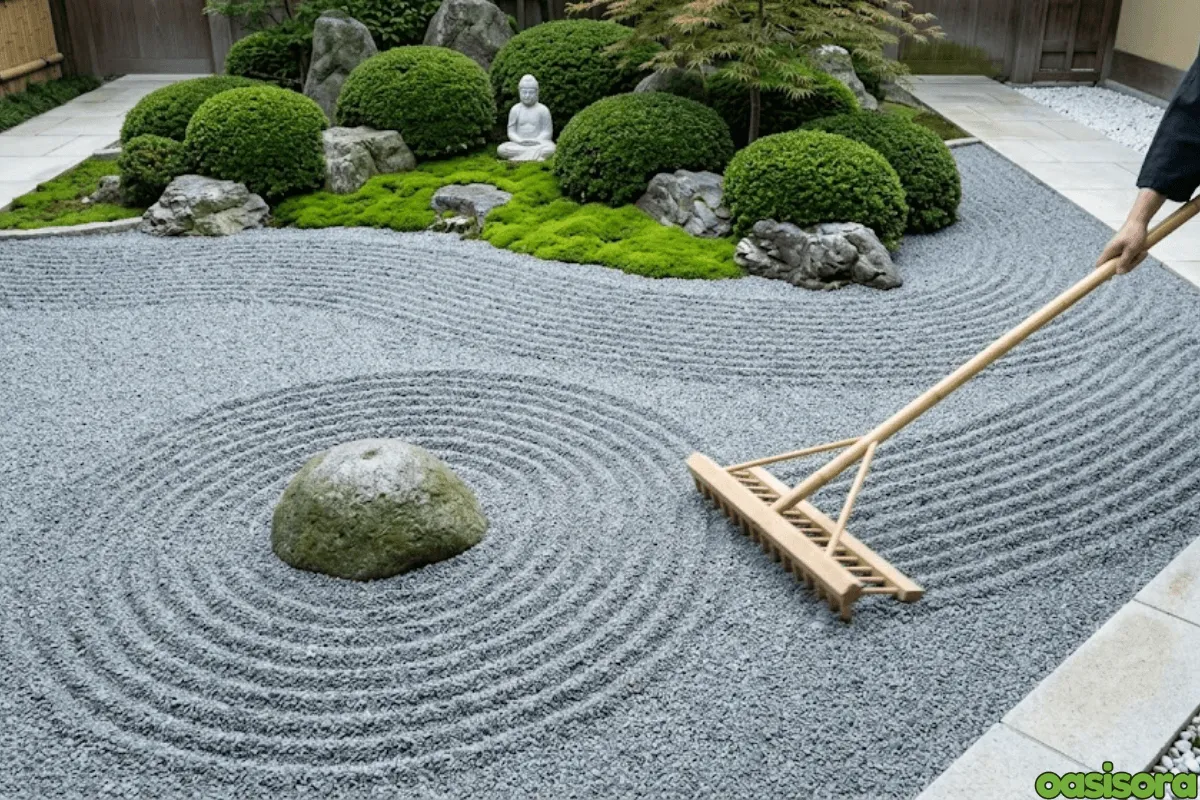
You know, life often feels busy, and stress builds up quietly. At times, the mind just needs a pause. Raking a Zen garden gives a quiet pause. It gently clears the head, as the lines in the sand slowly take shape. Each stroke of the rake brings a little peace and a short moment to breathe. It doesn’t just shape the sand but also shapes your mood, drawing you nearer to nature and giving the heart a small place to rest.
How to Start Raking a Zen Garden?
Zen landscapes are a peaceful way to relax and enjoy life. It is better to learn early what you need, why it is useful, and how to get the garden ready before you start raking. These small steps will make the practice easy and smooth.
For more inspiration and creative setups, explore different Zen garden ideas to design a space that matches your style.
What You Need Before You Begin?
To begin, gather a few easy items: sand or fine gravel, a rake, and some stones. For small spaces, a tray or wooden box works well. In a bigger place, use a flat ground with even sand. Having the right tools makes the activity more relaxing and fun.
Understanding the Purpose Behind Raking
The purpose of this art is not only to draw shapes but to bring balance and focus. Every line in the sand shows calm and order. This practice helps you feel quiet inside and turns stress into peace. When you move the rake slowly, you create a moment of mindfulness each time.
Preparing the Garden Surface
Before you begin, clear the surface of dust, leaves, or small dirt. Spread the sand in an even layer so the space looks smooth. This makes it easy to create clear patterns and enjoy the gentle process without breaks. A clean surface is the first step to a calm design.
Zen Raking Patterns and Their Meanings
Raking a Zen garden is more than moving sand. Each pattern has a meaning, and every line tells a quiet story. These designs bring a sense of balance and peace. They also show nature’s beauty in the simplest form.
1. Straight Lines: Simplicity and Order
Straight lines are the most common design. They stand for calm, focus, and discipline. When the sand is shaped in even rows, it feels like life is in order. This simple design shows that peace often comes from keeping things steady and clear.
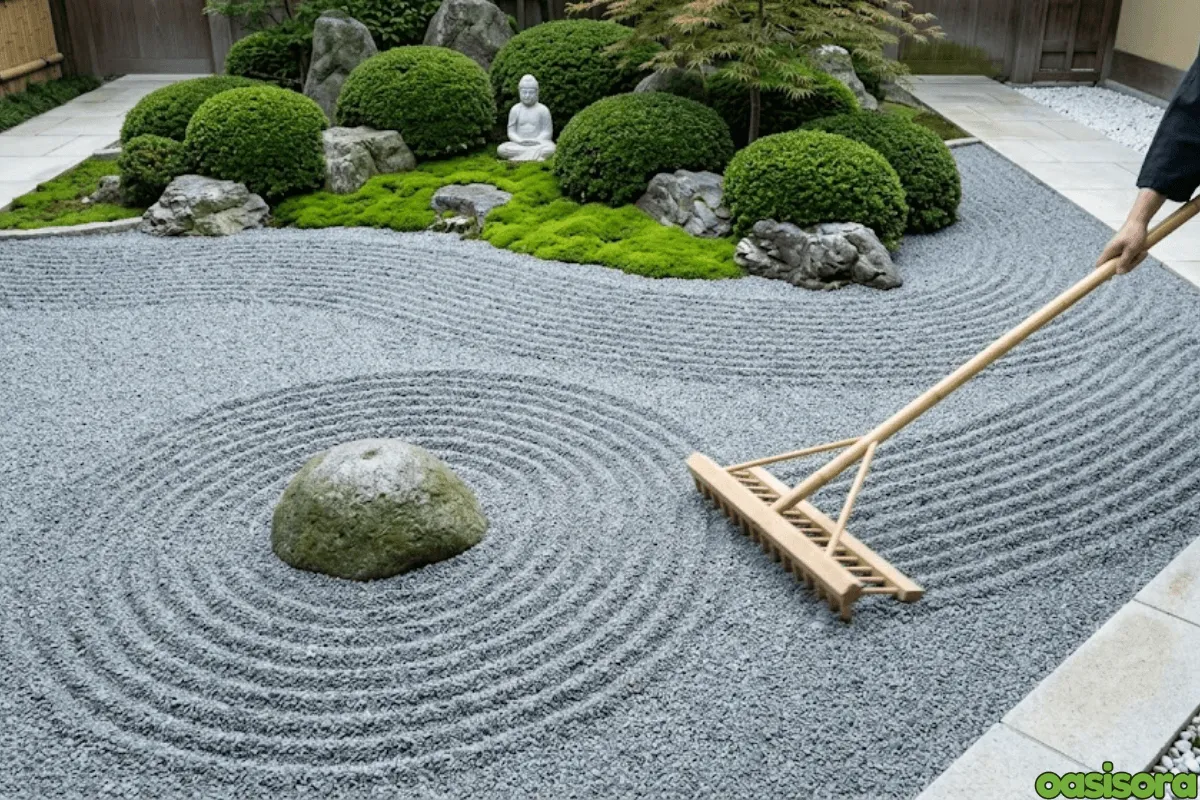
Zen Garden Straight line Raking
2. Curved Lines: Fluidity and Natural Flow
Curved lines copy the soft bend of rivers or gentle breezes. They show that life flows, even when it is not straight. This pattern adds motion to the sand, giving the garden a sense of life. It shows that change can come softly and feel natural.
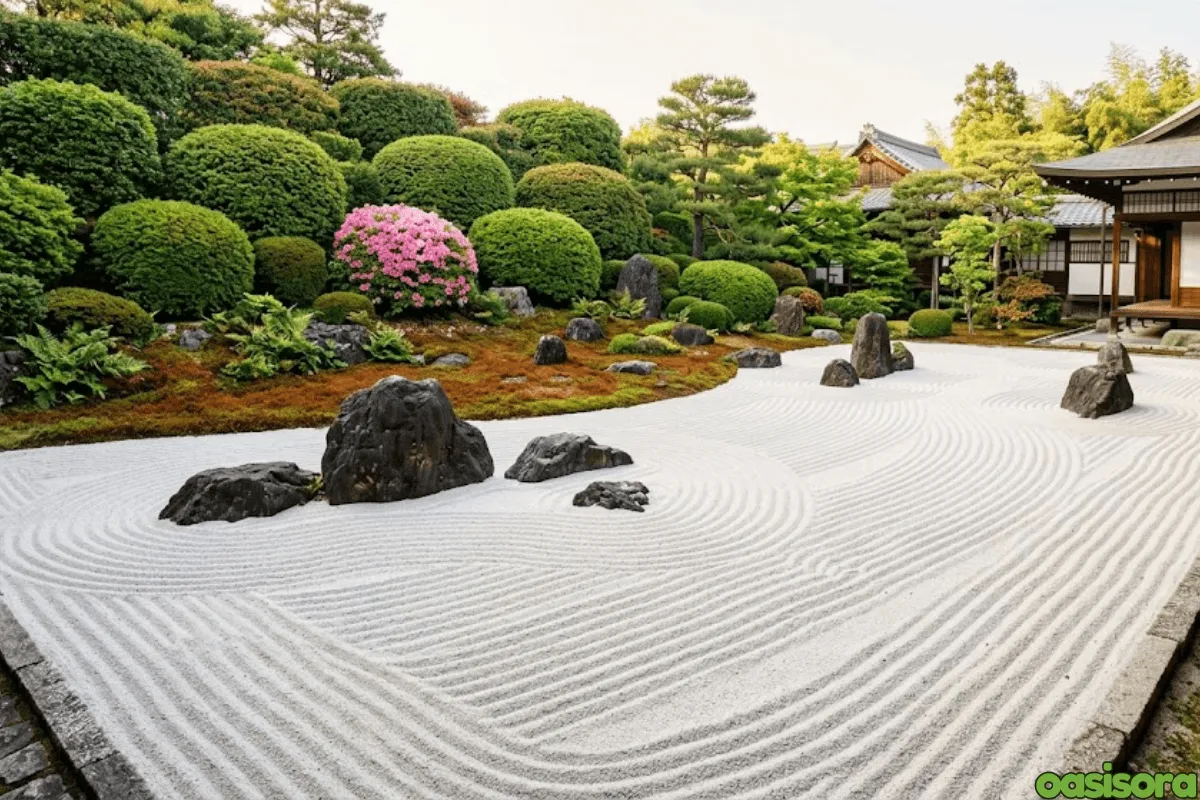
Curved line Zen Raking
3. Circles: Ripples and Infinity
Circles are drawn around stones to look like ripples in water. They also stand for infinity, a shape that has no end. This design creates a sense of unity and wholeness. Circles help the garden feel deep and endless, even when the space is small.
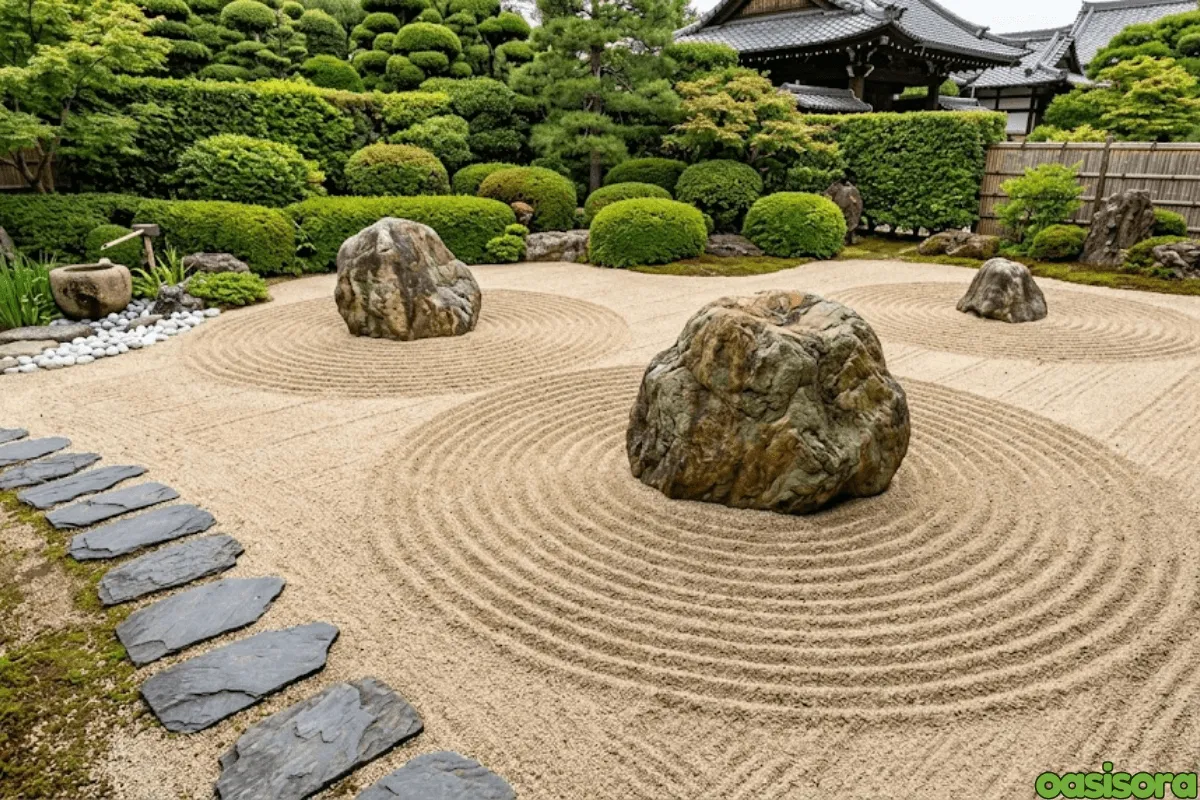
Circles & Riples Zen Raking
4. Meandering Stream Pattern: Symbolizing Water Flow
A meandering stream design resembles water flowing around rocks. It shows how nature finds its way, even when the path is not straight. This pattern gives a soft and flowing mood to the garden. It teaches that flexibility is a quiet strength.
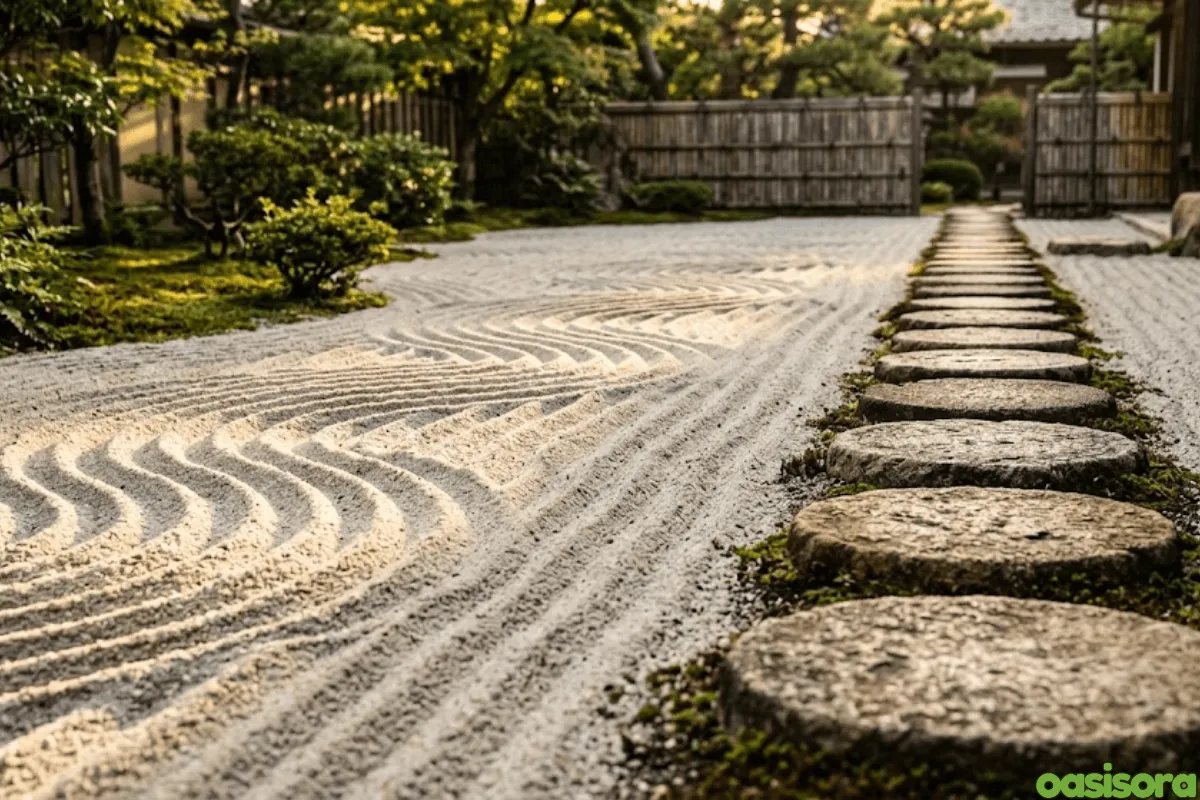
Stream Pattern Raking
5. Wiggly Lines: Impermanence
Wiggly lines move up and down like tiny waves. They seem playful while showing that nothing remains the same. This design speaks of change and passing time, helping the mind accept both joy and hardship as parts of life.

Wiggly Lines Rake Pattern
6. Custom Patterns: Expressing Personal Meditation
Custom designs allow freedom. You can draw shapes that match your own thoughts or feelings. This makes ranking personal and creative. By creating custom patterns, the garden becomes a mirror of your mind. It turns the act of raking into a true meditation.
Custom Pattern Raking
Types of Rakes for Zen Gardens
Choosing the right tool for drawing lines in the sand can be a challenge. The type of rake you use changes the look and the feeling of the design. Each tool has its own style and use, from big gardens to small tabletop spaces.
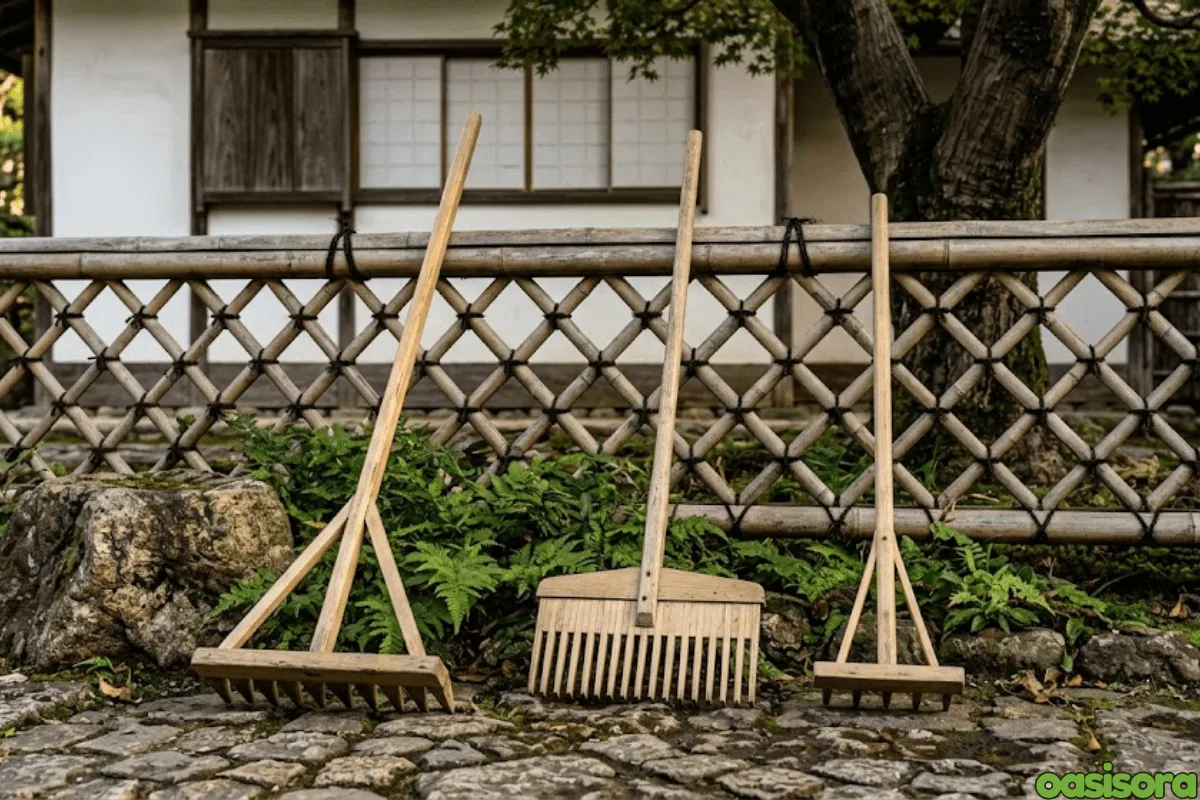
1. Traditional Wooden Zen Rakes
The wooden rake is usually the tool people use for this practice. Most are made from bamboo or another light wood. With wide, sturdy teeth, they leave clear lines across the sand. This type of rake is simple to use and feels natural in the hand. It connects the gardener to the old ways of raking a Zen garden.

Wooden Zen Rakes
2. Miniature Rakes for Tabletop Gardens
Mini rakes are made for small Zen gardens that sit on a desk or table. They are light and easy to move, with fine teeth that draw neat lines in a small space. These rakes help people enjoy the calm of raking, even indoors. They show that peace can fit into any part of daily life.
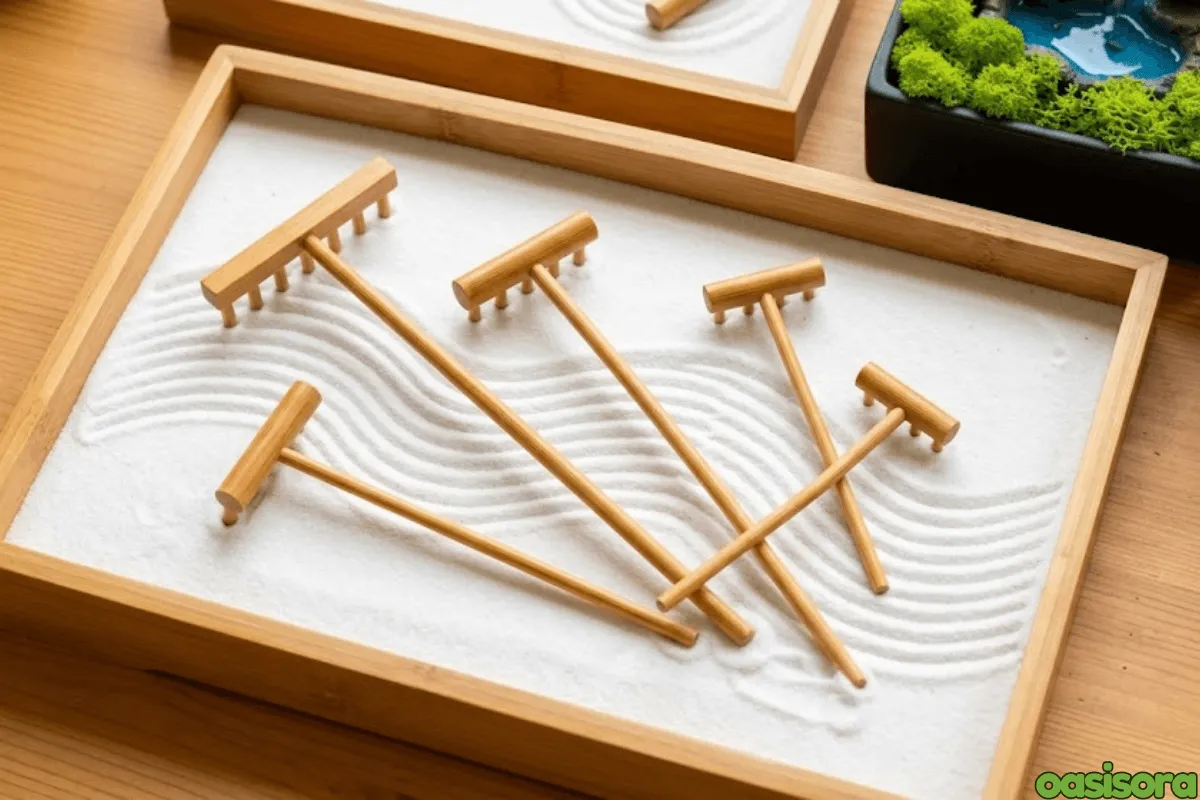
Mini Rakes for Tabletop Garden
3. Adjustable Rakes for Larger Areas
Adjustable rakes can change the width between the teeth. This makes it easy to create thick or thin lines in the sand. These tools work best in extensive outdoor gardens where designs need variety. With one tool, you can make many patterns without switching rakes.

Adjustable Rake
4. DIY Tools for Zen Raking
Some people prefer to make their own rakes from simple items. A fork, comb, or brush can turn into a tool for creative designs. DIY tools allow freedom and make the practice more personal. They remind us that drawing is not about rules but about calm and expression.
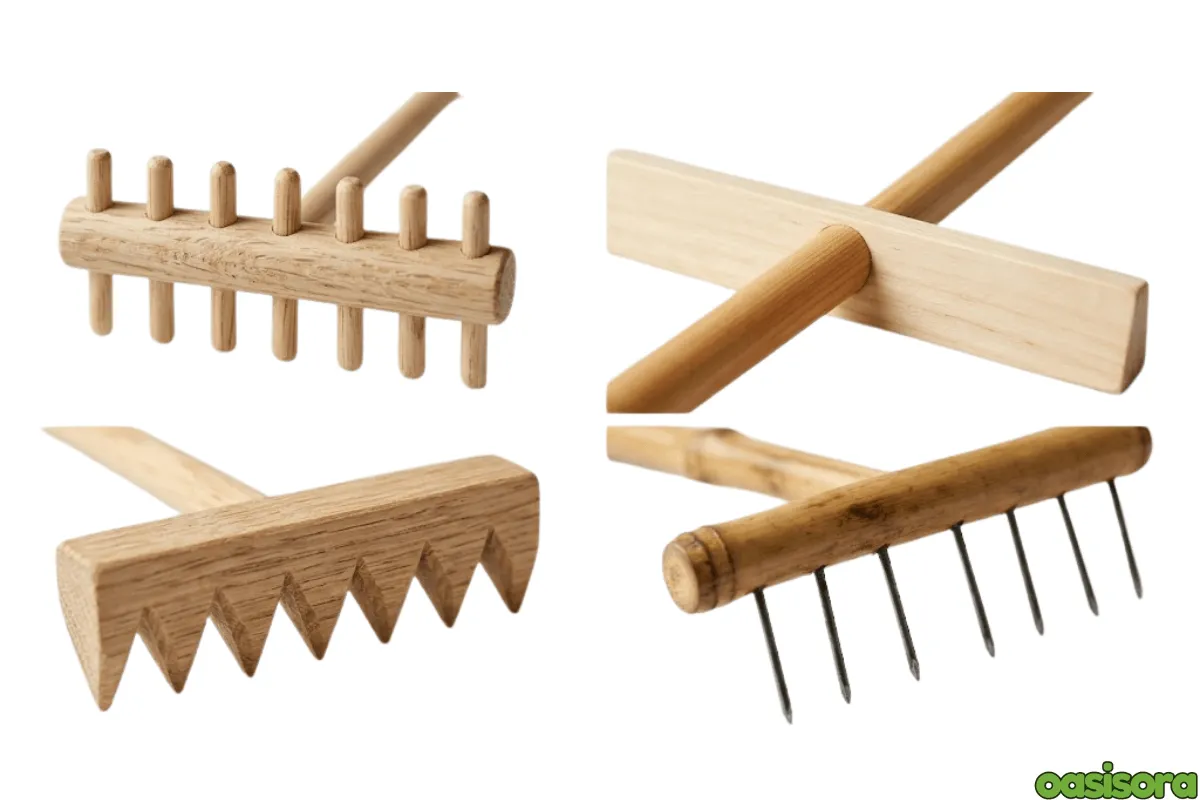
DIY Zen garden tools
Raking Techniques: How to Do It the Right Way?
Good shaping is not only about tools and sand. The way you move and the care you take make the design look calm and balanced. By learning simple techniques, you can enjoy the complete peace of this practice.
Proper Posture and Movement
No doubt, good posture helps you stay fit, especially while raking a Zen garden.
- Keep your back straight, whether you’re sitting or standing.
- Relax your hands.
- Move the rake at a slow pace; no need to rush.
- Each stroke should feel gentle and smooth.
- This steady motion brings a sense of balance and keeps your focus on the present.
Tips to Avoid Uneven Lines
When the sand is rough or the rake leans, the lines may turn uneven. To keep them clear, level the surface at the start. Hold the rake firmly with both hands and guide it in a single direction. Brush off the teeth occasionally to prevent clumps of sand from breaking the design. These small steps help the patterns stay neat and clean at their best.
Common Raking Mistakes to Avoid
- When you rake too fast, the lines become messy and lose their shape.
- If you cross over a design that is already finished, the flow breaks and the pattern is spoiled.
- If you don’t clear the sand first, small stones or leaves can disturb the lines, making the garden look messy.
- Skipping the first step of preparation also makes neat designs harder to create.
By moving slowly and keeping the surface smooth, these mistakes can be avoided with ease.
Zen Garden Raking as a Mindfulness Practice
A Zen garden is more than sand and lines. This traditional practice gives the mind a gentle break. By repeating the simple steps often, it slowly turns into a habit that adds calm moments to daily life.
1. The Meditative Benefits of Raking
When you rake, you move more slowly and feel the present moment. Each stroke clears away busy thoughts and makes the mind calm. The soft sound of the sand moving adds to the peace. Over time, this act lowers stress and builds inner balance.
AP News explains that simple garden work, such as raking or looking after the soil, significantly helps reduce stress and improve mindfulness, making this practice feel like natural moving meditation.
2. Raking as a Daily Ritual
Secondly, making raking a daily ritual turns the garden into more than just decoration. Ten minutes is enough to bring a little order to the mind. It’s easy to fit into morning or evening routines. By working in a dry garden often, you create a habit that always brings you back to calm, no matter how hectic and stressful the day feels.
3. Mindful Breathing While Raking
Thirdly, breathing slowly while tracing makes the practice deeper. When you raise the rake, take a slow breath in. As you draw the lines, breathe out. The rhythm makes it easier to stay focused on the present. Moreover, the breath and the rake work together simultaneously, creating a flow that feels gentle and healing. It teaches the body and mind to stay calm with every pattern.
Designing Your Own Zen Garden for Raking
Raking a Zen garden becomes more meaningful when the design fits your space and style. Choosing the correct type of sand and layout helps create a place that feels peaceful and easy to care for.
Choosing the Right Garden Type (Mini, Rock, Traditional)
- A small Zen garden on a desk or shelf can give peaceful breaks in the middle of study or work.
- A rock garden, or karesansui, is larger and usually built outside, with stones arranged to look like mountains and islands.
- Likewise, a traditional garden mixes sand, stones, water, and plants, creating a whole space to walk and reflect.
The type you choose depends on your time, space, and purpose.
Best Sand and Stone Combinations
The right sand and stones give the garden its simple beauty. Fine white or beige sand is easy to rake and makes clean lines. Dark stones add contrast and stand out against the light surface. Smooth, round rocks can show islands, while tall stones may stand as mountains. When balanced together, sand and stones create harmony that makes raking a Zen garden relaxing and natural.
As highlighted by The Spruce, choosing the right mix of sand, rocks, and natural elements is key to building a calming design that truly reflects Zen principles.
Ideal Layout for Daily Raking
A good layout makes the garden easy to enjoy each day. Leave some sand free so you can create new lines and shapes. Put the stones where they guide the rake, not where they block it. Add moss or small plants only if they don’t disturb the pattern. A simple layout makes it easier to keep shaping daily, turning the garden into a calm routine.
Cultural and Historical Context of Zen Garden Raking
In Japan, the practice of raking a Zen garden has a story that goes back many centuries. It grew from faith, art, and nature. By learning this history, we understand that the garden is more than sand and stones.
The Origin of Karesansui (Dry Landscape Gardens)
These gardens are called Karesansui. They began as a way to reflect nature, but without water. Designers placed rocks as mountains and spread sand as flowing seas. By the 14th century, this style became common in temple grounds.
According to JapanHouse (University of Illinois), this form of gardening was closely linked to Zen Buddhism during the 14th and 15th centuries.
Zen Buddhism and the Garden Connection
For Zen monks, drawing lines in the sand was a way to train the mind. Each careful stroke helped them focus on the present moment. This simple act was seen as meditation in motion. It shows how raking a Zen garden became a spiritual path as much as a creative one.
Japanese Cultural Symbolism in Sand Patterns
The patterns in the sand share messages from nature. Straight lines show order, and circles around stones look like ripples in water. A tall stone can stand for a mountain, while small rocks can be seen as islands. These signs reflect a culture that finds beauty in simple shapes and meaning in quiet spaces.
Light Maintenance and Seasonal Care Tips
A Zen garden looks calm and lovely only if you look after it. Little things, like smoothing the sand, keep the place ready for quiet time. With gentle effort, raking a garden can remain a peaceful practice all year round.
When and How Often to Rake?
The garden doesn’t require hours of work, but it should be raked regularly. Many people rake every day as a short routine, while others do it a few times a week. The key is to keep the patterns fresh and the surface even. Regular raking keeps the sand neat and helps the garden remain a place of focus.
Keeping the Sand Clean and Weed-Free
Over time, leaves, dust, or small weeds may fall into the sand. If they are not removed, the designs lose their shape. Use a soft brush or your hands to clear the surface before drawing lines. Clean, fine sand makes the patterns clearer and relaxing. This simple care adds to the joy of raking a Zen garden and makes each session smooth.
Dealing with Rain or Wind Disturbances
Rain or wind can disturb the designs and flatten the sand. After a storm, let the sand dry before raking again. If the wind leaves uneven spots, level the surface with your rake and then redraw the patterns. These moments are not problems but chances to start fresh. They remind us that change is natural and part of the garden’s beauty.
National Geographic explains that Zen gardens are made to accept nature’s changes. They turn into quiet spaces where people everywhere can pause, think, and rest.
Final Thoughts
Raking a Zen garden is not only about making shapes. It feels more like walking a quiet path that leads to peace. Every pull of the rake feels like a step. It shows that value comes from the practice itself, not from the design left behind.
This path also carries the spirit of wabi-sabi: finding beauty in what is not perfect. A line may curve, a circle may not join, yet the garden still feels whole. These minor flaws remind us that nature is simple and true, just as we are.
The garden shows how little it takes to feel calm. A few stones, soft sand, and light lines are enough to bring us nearer to nature. In that plainness, the garden reflects balance and reminds us that peace is never far.
FAQs
Can anyone rake a Zen garden, or does it require training?
Yes, anyone can try it. Raking a Zen garden isn’t about skill. What matters most is a bit of patience and a quiet mind.
How often should I rake a Zen garden?
You can rake daily for focus, or a few times a week to keep patterns fresh.
What kind of sand is best for raking?
Fine white or beige sand works best because it makes smooth and clear lines.
Can I rake my garden in different patterns each day?
Yes, you can change the design anytime because gardening is about freedom and peace.
Do Zen gardens have religious meaning?
They began with Zen Buddhism, but today people enjoy them for calm, beauty, and meditation.
Is a mini Zen garden good for stress relief?
Yes, even a small desk-size garden can ease stress. Simple lines in sand help relax the mind during a busy day.
Can children enjoy raking a Zen garden?
Yes, children can take part too. It gives them a safe way to play with patterns while also learning patience and focus