

Nowadays, fire resistant landscaping in Los Angeles is becoming a common practice. You know how flying embers and wildfires damage numerous homes every year. The bright side is that by using the right plants, smart design, and steady care, your yard can become much safer. This guide will show you easy ways to keep your space both beautiful and protected.
If you’re also interested in creating cooler, more comfortable outdoor spaces, check out our ideas for shade gardens in Los Angeles, which pair beautifully with fire-resistant landscaping.
Why Fire Resistant Landscaping Matters in Los Angeles
Every year, the wildfire season in Los Angeles worsens, and homes require more protection than ever. One of the best ways to keep your yard safe and beautiful is to landscape it so that it doesn’t catch fire.
Understanding Wildfire Risks in LA
You already know LA is at high risk for wildfires because of hot summers, dry air, and Santa Ana winds that make fires spread faster. According to the NFPA, 90% of home fires are caused by flying sparks rather than direct flames.
Additionally, the embers can fly more than a mile and land on yards, buildings, or dry plants. Therefore, homes on hills are more at risk because fire moves more quickly uphill. Because of all of this, fire resistant landscaping in Los Angeles is essential.
California Fire Zones: What Homeowners Need to Know

California Fire Zones
The state of California has made maps of Fire Hazard Severity Zones to help people get ready. The danger zones show where you need to be careful. You can see where the danger is in these areas. You must follow strict rules for defensive space if your home is in a Very High Fire Hazard Zone.
Even in areas that are less dangerous, embers can still spread and get to your property. You can make safer landscaping decisions by being aware of your fire zone.
Benefits of Fire-Resistant Landscaping for LA Homes
You get more than just safety with fireproof landscaping. It establishes a defendable area that allows firefighters to work while reducing flames and preventing embers. Using native and low-fuel plants also reduces maintenance and water usage.
How to Design a Fire-Resistant Landscape in Los Angeles
To make a fire-safe yard, you need to divide the space into zones and carefully plan each one.
The Three Defensible Zones Explained
According to Cal Fire’s defensible space guide, fire-resistant landscaping in Los Angeles works best when divided into three main zones. Each zone protects your house in a different way and makes it safer overall.
Photography by Greg Chasen
Zone 0: Ember-Resistant Zone (0–5 feet)

Ember-Resistant Zone (0–5 feet)
- Fire-prone materials should not be in this place.
- You can substitute stone, gravel, or pavement for wood mulch.
- Only plant small, low-growing succulents if needed.
- There can’t be any trash cans, piles of wood, or firewood.
Here are some creative outdoor succulent garden ideas you can try that also work well for fire-safe landscaping. There can’t be any trash cans, piles of wood, or firewood.
This is the most important zone because most home ignitions start here.
Zone 1: Lean, Clean, and Green Zone (5–30 feet)

Zone 1: Green Zone (5–30 feet)
- Use low-fuel plants that are far apart.
- As fire breaks, add decks or paths.
- Cut back bushes and trees often.
- Water the grass and keep it short.
This buffer slows flames and gives extra protection.
Zone 2: Reduced Fuel Zone (30–100 feet)

Zone 2 – (30–100 feet)
- Spread trees and shrubs into islands.
- Leave some space between the tree canopies.
- Use natural plants that can handle drought and fire.
- As a general rule, steeper slopes need bigger gaps between them.
This outer zone slows fire movement and filters embers.
Photo from wildfire home retrofit guide
Smart Layout Tips for Fire Protection
Your yard is like a wall that keeps you safe. Patios, roads, or stone paths should be added between plant areas. Use raised beds with fire-safe soil borders. Sort plants into zones based on how much water they need to stay healthy and avoid starting fires.
Slope Considerations in LA Landscaping

Slope Design in LA Landscaping
When it comes to hills, fire moves up faster. Homes built on hills need more hardscape and plants that are farther apart. The fire path can be blocked by retaining walls, slopes, and rock gardens. Native plants with deep roots also help stop flooding and keep you safe from fire.
Best Fire-Resistant Plants for Los Angeles Gardens
Safe plant choices are a big part of fire resistant landscaping in Los Angeles. The right plants protect your home while keeping the garden green and simple to manage.

Fire-Resistant Plants for Los Angeles Gardens
Native Plants Ideal for LA’s Climate
Native plants can handle LA’s dry heat better and don’t burn. Good options include:
- The California Lilac (Ceanothus) is a plant that retains a lot of water and remains green even when it’s dry outside.
- The toyon is a naturally fireproof plant.
- The Coast Live Oak tree is strong, dense, and fire-free.
These plants easily grow and make your garden beautiful.
Drought-Tolerant and Fire-Safe Plants
Agave and aloe keep water in their thick leaves, so they don’t burn easily. In the same way, alum root and California fuchsia survive on little moisture yet still stay lush, giving your garden extra protection. These plants are cheaper and give you greenery all year round.
Plants to Avoid (Highly Flammable Species)
Some plants are highly flammable and should be avoided when designing a fire-resistant garden. These species can easily catch fire and pose a risk to your property, especially during dry conditions. Avoid the following plants:
- Eucalyptus trees
- Pine trees
- Junipers
- Sumac
- Cypress
Proper Spacing and Grouping for Safety
After choosing a plant, spacing is just as important. When you’re gardening on flat ground, space plants at least twice as high apart. Give 4–6 spaces on hills. Spacing should be 4 to 6 inches on hills. Organize shrubs into groups, leaving empty spaces or dirt between them. Fire can’t jump across your garden now.
Hardscape & Material Choices for Fire-Safe Landscaping
Hardscape features provide an effective fire barrier and make your yard safer.
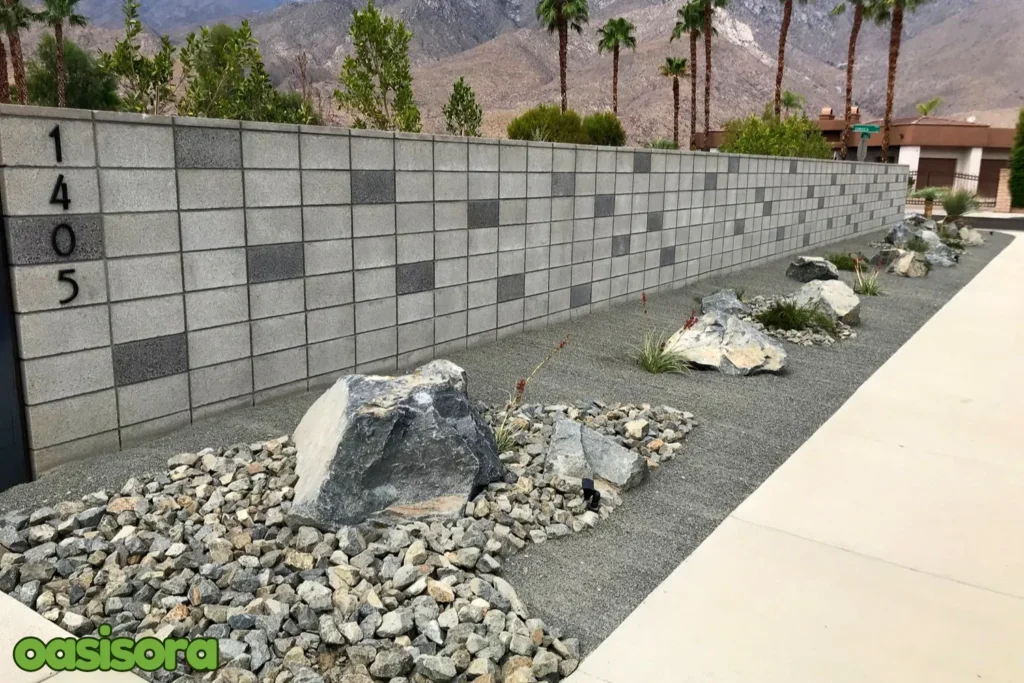
Hardscape Material for Fire-Safe Landscaping
Using Firebreaks: Gravel, Stone Paths, and Walls
Low walls, gravel beds, and stone pathways serve as firebreaks. They set up safe walking areas and prevent the spread of fires. The ideal gravel roads to block embers are at least 4 feet wide.
Fire-Resistant Decks, Patios, and Fences
Use concrete, tiles, or composite in place of wood. Metal or stone fences near the house are safer than wooden ones. These designs look modern and also protect the home from heat.
Safe Mulch Options (What to Use and Avoid)
Decomposed granite and gravel are the safest mulch choices. Avoid dry wood chips, bark, or pine needles because they catch fire fast. The right mulch also helps soil stay moist while lowering fire risk.
Smart Irrigation & Water Strategies
In LA’s dry climate, water management is essential to maintaining healthy and fire-safe plants.
Maintaining Hydration Without Overwatering
Deep watering once or twice a week works better than giving a little water daily. It helps roots grow strong and makes plants handle heat better. Strong and healthy plants also resist fire more.
Emergency Water Sources for Firefighting
Tanks or barrels of backup water should be kept in homes with big lawns. Use hoses that are long enough to reach all corners and mark outside taps. They enable firefighters to respond more quickly.
Best Practices for Drip and Smart Irrigation Systems
According to the EPA WaterSense program, you can save 60% of water by drip irrigation. Weather-based smart systems adjust watering by season and rainfall. For safe and effective fire resistant landscaping in Los Angeles, grouping plants according to their water requirements is a straightforward technique.
Ongoing Maintenance for Fire Prevention
The best design can also fail if it is not properly maintained. You can keep your lawn safe by simple monthly and seasonal habits.
Monthly & Seasonal Checklist
- Every month, remove dead plants, clean gutters and roofs, and check irrigation systems.
- Test water access and undertake extensive pruning before fire season.
- Clear dry debris and check moisture levels every week during the summer.
Pruning, Debris Clearing, and Lawn Care Tips
- Trim tree branches 6–10 feet high.
- Remove dry grass, pine needles, and leaves often.
- Keep lawns short and watered.
Tools and Products for Fire-Safe Yard Maintenance
- Make use of powerful mulching mowers, shears, and rakes.
- A moisture meter helps you check if the soil is healthy.
- Use a leaf blower and gloves to clear debris safely and fast.
Fire-Resistant Landscaping Regulations in Los Angeles
You know, some areas of Los Angeles are at high risk of fire. So, homeowners need to follow a few important regulations to remain safe.
LA City and County Guidelines
The law mandates defensible space and brush removal in places with a Very High Fire Hazard. Annual inspections are conducted, and violations of the guidelines result in fines.
Resources from Cal Fire and the California Native Plant Society
Cal Fire provides information on plant lists, spacing, and defensible zones. For fire resistant landscaping in Los Angeles, the California Native Plant Society assists people in selecting safe native plants.
Incentives and Rebates for Fire-Safe Upgrades
Some local programs offer rebates for turf replacement, drip irrigation, or using fire-safe materials. These rebates help lower costs and make yards safer.
Real-Life Examples of LA Fire-Resistant Landscapes
Real projects in Los Angeles show how fire-safe yards look good and protect homes.

Hillside Home in Malibu
Case Study: Hillside Home in Malibu
This home added stone terraces, wide gravel paths, and succulents. When fire swept through the area, the landscape slowed the flames and saved the property.
Urban Garden Redesign in Studio City
A small backyard was updated with native plants, metal fencing, and drip irrigation. The design lowered risk while giving a fresh and modern look.
Before and After: Woodland Hills Home
The owners replaced eucalyptus and juniper with Toyon, lilac, and gravel borders. The yard became both safer and more welcoming for family use.
Final Thoughts:
Invest in Fire-Safe Landscaping for Peace of Mind
Fire resistant landscaping in Los Angeles gives you more than a pretty garden, it gives you safety. You know wildfires and embers are part of life in LA, so your every smart step matters. By choosing safe plants, adding stone or gravel breaks, and maintaining a steady routine, you can turn your lawn into a shield for your home. Fire-safe landscaping is an ongoing habit, not something you do just once.
FAQs
What is fire resistant landscaping in Los Angeles?
You need firebreaks, safe plants, and proper spacing to prevent embers and flames from reaching your house.
Name some plants that are best for fire-free landscaping in LA?
Agave, California lilac, Toyon, and lemonade berry are all good choices because they keep more water and don’t burn easily.
Name the zones in Los Angeles that are at risk of fire?
Zones 0, 1, and 2 (up to 100 feet) are all at risk of fire.
My home is not in a high-risk area, so should I go for fire-free landscaping?
Yes, homes that aren’t on danger maps are still at risk because ashes can travel more than a mile. Fire-free landscaping adds extra safety for every property.